By
By
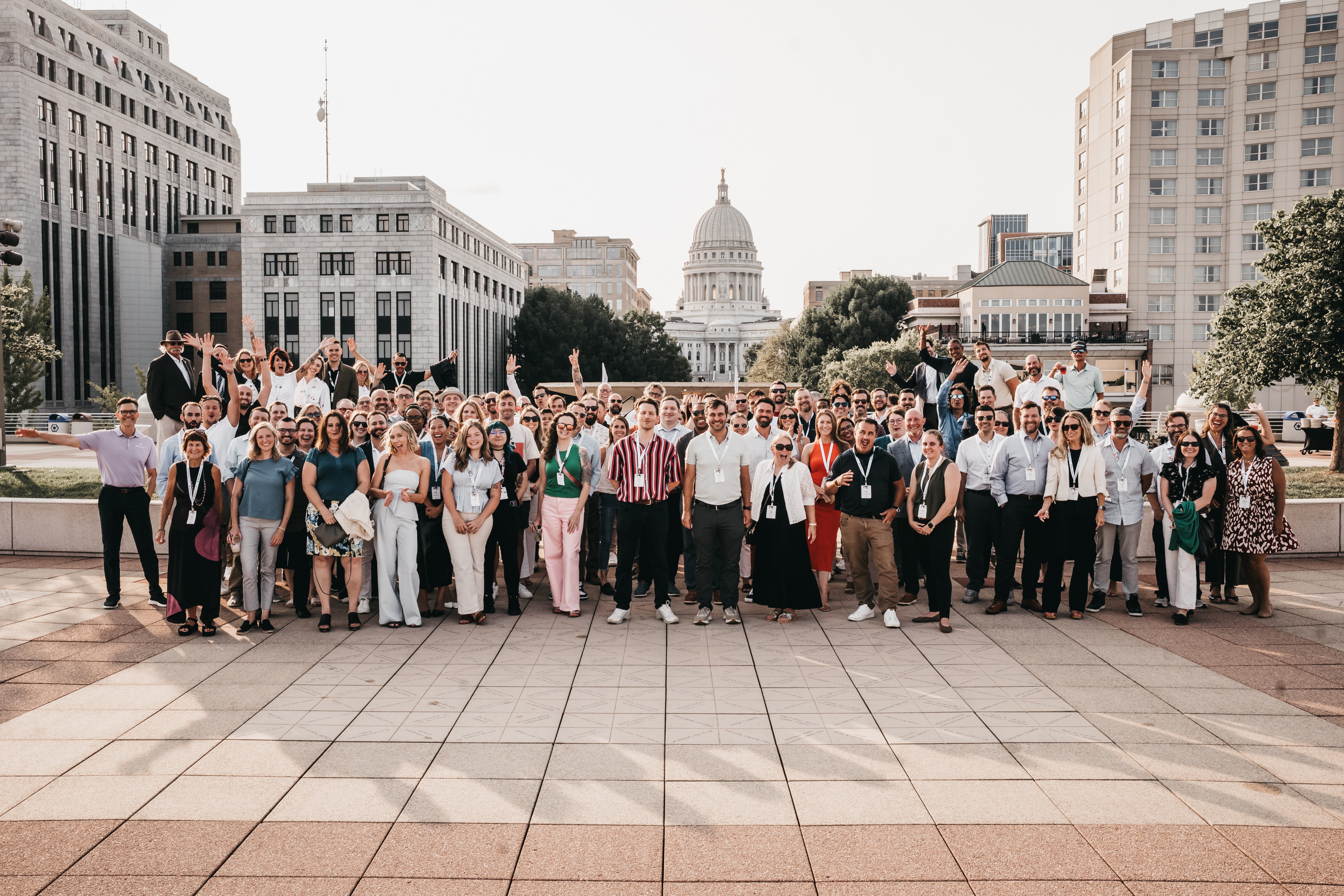
If your LinkedIn feed looked anything like ours in late July, you already know something happened in Madison.
More than 120 behavioral health marketers, operators, founders, and clinical leaders spent two days here for our third annual Marketing Summit. They sat through 15 sessions from more than 30 speakers, played some golf, paddled around the lake, and wrapped up with an awards dinner on the Monona Terrace rooftop.
When we surveyed attendees afterward, the average rating came back 9.6 out of 10.
The highest marks went to the networking itself. One attendee told us it felt like they knew everyone after the first night.
A few more, in their own words:
"The content was excellent, the presenters were true experts in their fields." — Sero Mental Health
"New ideas and new ways to think about how we tell the story of quality care." — Ashley Addiction Treatment
"It wasn't just about marketing. It was about people." — Release Recovery
You had to be there for the networking. The insights we can share.
Here are the six that came up most often on the drive home.
No. 1 Diversify your channel mix. Then give new channels time to work.
Financial visibility is also what makes new channels work.
Ryan Jackson of Recovery Centers of America once doubled a budget and watched CPA spike to $4,000. Because he had the numbers to back his patience, he held for 90 days and watched it settle around $2,200.
Daniel Krasner keeps roughly 20% of spend in a standing "marketing sprinkle" for unproven channels, because the mix that works today isn't guaranteed to work next year.
A healthy mix gives each channel a job:
- Referrals bring the highest-quality, best-converting admits.
- Organic builds durable demand over time.
- Paid creates speed and scale when census needs it.
Whatever you do, don't cut a channel after one bad month. Set a test budget, define the learning window, and audit your admissions follow-up before you blame the source.
See the full channel-mix and conversion benchmarks >>
No. 2 To future-proof your organization, focus on what won't change.
Jeff Bezos famously future-proofed his company by betting on what wouldn't change in 10 years. Our co-founder Jeremiah Calvino applied that same logic to behavioral health.
No matter what AI changes, three things will still be true a decade from now:
- Most people who need help won't ask for it. SAMHSA data puts 80 to 90% of people needing treatment as never receiving it, and that gap hasn't budged even with telehealth in everyone's pocket. So how are you inspiring the next step?
- When people do ask, they need fast intake. Someone offered a same-day assessment is two to three times more likely to get treatment than someone given an appointment three days out. A slow admissions process cuts your chances in half.
- Provable claims make you stand out. That matters for people, and it matters even more for AI, which reads every page, every claim, and every gap between what you say and what you can back up. It also happens to be making recommendations now.
Jeremiah turned that last point into a tool. It's called the Copy-Paste Claim Audit, and the test is right there in the name: paste in your website, and it hunts down every claim so generic that any other center could paste it onto their own site unchanged.
"Individualized care." "Compassionate staff."
Claims like these give AI nothing to verify, so they give it nothing to recommend. The audit scores each one it finds and drafts a specific, provable replacement.
Run the Copy-Paste Claim Audit on your site >>
No. 3 Your alumni are your best marketing asset.
Our Outcomes panel made the connection explicit. You can't credibly measure long-term outcomes without a real alumni program, because your alumni are that data.
They're also your strongest proof point. Nothing builds trust faster than someone who has been through your program and has nothing to gain by saying it worked.
We even built an award around this idea. The Voice of the People Award went to Eagle Creek Ranch Recovery, whose alumni have left 161 reviews on Recovery.com. Every single one is five stars.
Read more: 7 Ways Alumni Programs Drive Marketing, Outcomes, and Growth >>
No. 4 Track outcomes. Then actually use them.
The same idea extends past alumni. The centers earning lasting trust aren't just filling beds. They're proving what happens after someone walks through the door.
If you're already collecting outcomes data, it belongs in your marketing, not just your clinical reporting. And if you're not collecting it yet, that's the fix to make before your next campaign cycle rather than after.
Read more: Outcomes-Based Marketing: 7+ Ways Tracking Data Fuels Growth in Recovery >>
No. 5 Ask for the financials.
Good business data leads to good marketing decisions.
George Kocher of Brand North described what it was like managing $3 million a month in ad spend with zero access to the P&L. Daniel Krasner of Sero Mental Health won't take a marketing role anymore unless he's on the financial distribution list.
Both landed on the same fix: track revenue and EBITDA per admit instead of cost per lead.
A good place to start is agreeing on what "CPA" even means at your center. Media only, media plus salaries, and fully loaded are three different numbers that usually get treated like one.
No. 6 Don't use AI only as a magical typewriter. It's more valuable in other ways.
Our keynote speaker, Andy Crestodina of Orbit Media, gave the highest-rated session of the Summit. His argument was simple: most marketers use AI to write, but the better marketers use it to research and audit.
He shared his four favorite use cases, prompts included:
- Persona development.
- Audit your website for how well it speaks to that persona.
- Audit your website schema for missed SEO opportunities.
- Audit your mobile experience for patient painpoints.
An AI persona audit surfaces real, fixable gaps. Buried credentials. No comparison between program levels. An admissions process that never actually gets explained anywhere on the site.
What AI can't do is write the emotional story. That still has to come from you.
Get all four of Andy's prompts here >>
Missed it this year?
The interest list for the 2027 Summit is open. The people who came this year rated it a 9.6 out of 10, and the list gets first crack at seats.